

Archive Record
Images
Additional Images [3]
Metadata
Title |
James P. Jackson and Bradford's Battery |
Dates of Creation |
June 13, 1895 |
Scope & Content |
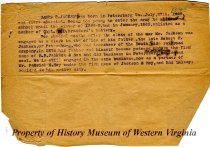
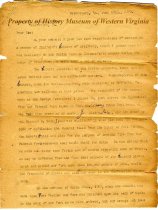
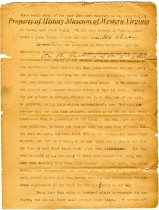
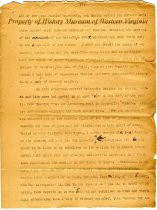
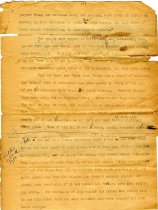
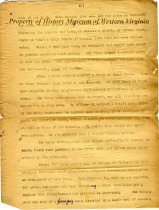
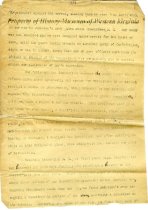
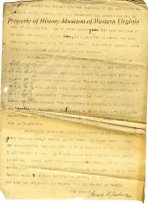
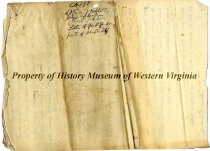
The paper is very brittle, tears easily, and page 5 is missing. James P. Jackson was born in Petersburg, Virginia the 27th of July, 1848 and was educated there. Too young to enlist when the War first started, he waited until the winter of 1864-1865, when he joined Captain W. D. Bradford's battery. After the close of the war, Jackson was a clerk in the office of his father, who was treasurer of the South Side railroad. In 1876 he and his father became partners in their firm, R. F. Jackson & Son, doing business in Petersburg as dealers in ice and coal. At the time this was written he was in the same business and in partnership with Patrick H. Hoy under the name Jackson & Hoy, and still resided in Petersburg Jackson joined up with Bradford's battery on the Roslyn farm in Chesterfield County during the siege of Petersburg, when he was 16 years old. A detachment of the battery was stationed at Belfield, Virginia, guarding the railroad. The Roslyn Farm was along the Appomattox River across from Fort McGilvery, which was manned by the Federals. Bradford's battery was positioned so as to enfilade the Federal lines from the river to Fort Stedman (another Federal fort) and draw fire when the Federals would shell the city. Members of the battery would collect the Federal shot, shells and fragments and sell them to the Confederate Government. On March 25 when the planned Confederate assault was made on Fort Stedman the battery's orders were to fire upon the woods in the rear of the fort. Confederate troops got there earlier than expected, and received friendly fire. On April 2, 1865, Bradford's battery witnessed the assault by Federal infantry on the Confederate lines between City Point and the river. A courier arrived and informed the officer in command (Lt. Hoy) that the main line of works were in the hands of the enemy, and for him to fire the mortars on those works. Hoy informed the courier that the enemy had not captured the works, and that he refused to fire. The courier rode away but returned awhile later and informed Hoy that General Gordon thanked him for not firing on our men. That night the battery was ordered to evacuate the position, and took with them the mounted cannon on wheels, while the mortars were spiked. They went to the Richmond and Petersburg turnpike and awaited the rest of the battalion. They then marched toward Appomattox Station, arriving April 8th, and parked their equipment with other equipment in a field. Between the line of guns and the station was a thin line of woods. Before taking a rest, Jackson bade goodby to Lt. Hoy who was ill and was taken by ambulance to the station where he would be transported by train to Lynchburg. In a short while Sergeant Leak Milam, from the battery, rode up and informed the troops around the guns that a body of Federal cavalry were forming for a charge. They could be seen through the woods already mentioned. The men sprang to their guns and fired upon the enemy, some being mounted and others not. Their first shot was canister on a Federal line only about 300 yards distant. Other charges were made but repulsed. This was kept up for about an hour but the enemy were able to move in on the Confederate flanks and forced them to abandon their guns. Some of Jackson's battery received sabre cuts. The next entry is a statement by Lt. Hoy. He says that while he was in the rear coach of the train after it was about 4 miles out from Appomattox Station, an engine and tender overtook the train. Their information was that the Federal cavalry had taken the station and burned the freight cars standing there. Page five is missing Hearing that General Lee was about to surrender, men from the battery determined, if possible, to reach General Johnston's Army. While on the road they came to a church or school house where there were some wagons, some hitched with mules and others not. Jackson and a companion each took possession of a mule, but the first one threw Jackson. Continuing their journey they came to a ferry on the James river. At the ferry were as many as a hundred Confederates all waiting to get across. As the ferry had been destroyed Jackson's only chance was to swim across. Warned by an officer that he could endanger their lives by swimming with the animals Jackson and his companion entered the water and swam across with little difficulty. Taking the first road they found, they headed west until after dark, when they ran into an encampment. Jackson's party, now numbering five (one from North Carolina and another from Pittsylvania county), were arrested as deserters. The encampment was a foraging train escorted by a small body of cavalry. They protested their arrest, and explained that Lee had surrendered at Appomattox and that they were on their way to join up with Johnston's Army. This all fell on deaf ears. Their release came when another party of Confederates corroborated their story. The following day the group crossed the James some fifteen miles above Lynchburg and struck out for Greensboro, North Carolina. The man from Pittsylvania was a captain and so was in charge. He took them to his house where they met his mother and father. The father insisted Jackson stay a few days and then return to Petersburg. This he refused and continued with the others to their destination. After reaching Leaksville, North Carolina they found Captain Bradford of their battery. After making inquiries about other members, the men continued on to Greensboro, and found Johnston's army. The streets were in a turmoil. Inquiring as to the cause, they learned that some members of Wheeler's cavalry had charged the buildings of the commissary, looking for whiskey. General Beauregard had ordered his men to fire into them, which resulted in some being killed. One of the cavalrymen fell near the home of Jackson's aunt and he assisted in taking the man into the house. where he died. This all occurred during the armistice between Johnston and Sherman. Other men from Lee's army were also in Greensboro. They asked Beauregard what they should do, and were told to return to Virginia, as the terms of surrender may very well turn out to be different. So they turned their faces homeward and walked from Greensboro to Nottoway Court House, getting their paroles in Danville. From Nottoway, Jackson hopped a train and got to Petersburg. Arriving in Petersburg at two in the morning, he went directly home and knocked on the door. His father raised a window and asked who was knocking at that time in the morning. When Jackson told him it was his son, the father was more than surprised. The father had been told that his son had been killed at Appomattox Station. There was another James Jackson, who had been severely wounded and a report about him had reached the family. The page was signed by Jackson. The entry on page 9 is what Bernard wrote with regard to the chapter in his book where he thought he would place the story. |
Year Range from |
1895 |
Creator |
Jackson, James P. |
Year Range to |
1895 |
Subjects |
Ambulances Animals Armistices Arrests Artillery (Troops) Artillery (Weaponry) Assault Battery (military) Canal Canister Captures Church City Civil War Civil war battles Command Command of troops Commissaries, Military Complements Confederate Army Confederate officers Confederate soldiers Confederate veterans Courier Deserters, Military Destination Detachment Dismounted, cavalry Duty Earth-works (military) Encampments, Military Enemy Escapes Evacuations Farms Federal cavalry Ferry Field Fight Fire (weapons) Flank Forts & fortifications Freight car hopping Freight trains Guards Guns Horse Infantry Instructions Journey Line (military) March, Military Mortars (Ordnance) Mounted, cavalry Mules Parole Picket line Railroad Railroad cars Railroad locomotives Railroad stations Rear (military) Recollection Rivers Sabre cut Saddles Shells (Ammunition) Shot Sick Siege Surrenders Town Trains Turnpike roads Wagon trains Wagons Wheels Whiskey Woods |
Search Terms |
Appomattox Court House, Virginia Appomattox River Appomattox Station Belfield, Virginia Bradford's Battery Chesterfield County, Virginia City Point Railroad Civil War Confederacy, the Confederate Army Confederate Veterans Danville, Virginia Fort McGilvery Fort Stedman Greensboro, North Carolina Hare's Hill Jackson & Hoy James River Leaksville, North Carolina Lynchburg, Virginia North Carolina Nottaway Court House Petersburg, Virginia Pittsylvania County, Virginia R. F. Jackson & Son Richmond, Virginia Roslyn Farm South Side Railroad War Between the States War Talks of Confederate Veterans |
People |
Beauregard, [Pierre Gustave Toutant] Bernard, Geo. S. Bernard, George S. Bradford, William D. (Capt) Coit, [James Campbell] Cummings, (unknown) Captain Gordon, John Brown Hoy, Patrick C. Johnston, Joseph E. Lee, Robert E., General Milam, Leak Pace, J. Alexander Sherman, William T. Wheeler, Joseph Young, Richard A. |
Event |
Civil War |
Collection |
George S. Bernard Collection |
Imagefile |
025\200975158.JPG |
Number of images |
9 |
Object Name |
Letter |
Object ID |
2009.75.158 |
Extent of Description |
7 page letter and a brief biography, size 8 1/2" x 11" |