
Archive Record
Images
Additional Images [4]
Metadata
Title |
George Jefferson Hundley recollections |
Dates of Creation |
April 29, 1895 |
Scope & Content |
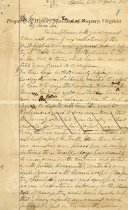
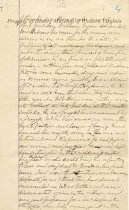
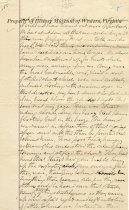
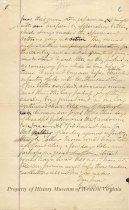
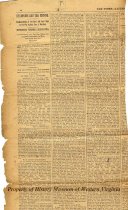
George Jefferson Hundley was born near Mobile, Alabama in 1838. On his mother's side he was the great-great-grandson of Peter Field Jefferson, who was an uncle of President Thomas Jefferson. Orphaned at an early age he was reared by relatives in Amelia County, Virginia. He studied law in Lexington, Virginia, and was licensed to practice in 1860. Hundley enlisted as a private in the 19th Virginia Infantry, where he was promoted to 2nd Lieutenant. He then changed over to the 5th Virginia Cavalry, which by the end of the war was absorbed into the 15th Virginia Cavalry. After the war, he taught school, established his law practice in Buckingham County, and served in the Virginia Senate. He was a General in the Virginia Militia, was 5th Circuit judge, and a member of R. E. Lee Camp #1 in Richmond. He died in Richmond in 1924. These recollections are in three parts. The first is handwritten followed by two separate newspaper articles (large). Hundley reflects on a cavalry engagement with the Federal Infantry at Todd's Tavern (Spotsylvania Court House) in May of 1864. For three days the cavalry under Fitzhugh Lee resisted Grant's efforts to seize the important position that would place the Federals behind General Lee and place Grant on the road to Richmond. The cavalry were dismounted and resisted Warren's Corps of infantry with carbines and pistols. The sound of battle gave the impression that only infantry were involved. The advancing Confederate Infantry, on hearing the rolling fire refused to believe that only Confederate Cavalry were engaged. Hundley tells the story of an infantryman, approaching a church two miles from the front, having a conversation with the chaplain of the 4th Cavalry, who was there with the wagons and wounded. When asked by the infantryman who was doing the fighting at the front, the chaplain replied that it was the cavalry. This drew the response that the chaplain did not know what he was talking about, and if the chaplain thought that the fight had been going on for three days then the chaplain must be lying. The thought of cavalry being able to fight infantry for three days drew laughter from the infantryman and the rest of the infantry line of march. Hundley goes on to say that on the third day, Wickham's dismounted cavalry formed a line along a fence and for hours maintained a continuous fire not giving an inch. Only the Ambulance Corps could be seen through the smoke as they transported the wounded or dead to the rear. Hundley's men, as members of Payne's Brigade, were mounted and were used as support behind the line. At mid-day Wickham withdrew from the line to regain their horses, as the enemy were closing in. Fitz Lee ordered all the troopers to move off quickly toward Spotsylvania Court House, which meant things were desperate. Fitz Lee had fought his command to a frazzle but had bought precious time by keeping Grant tangled up. Hundley states that they were almost surrounded, but they once again dismounted and in the village prepared for a last desperate struggle. Help came just in time. J. E. B. Stuart was coming down the Gordonsville road. He had gone back to hurry up the infantry, and they were now tramping behind Stuart. After Stuart stifled a cheer, all that could be heard was the steady tramp of Longstreet's legions as they came up and went into line behind Hundley and the other troopers. Hundley recognized the grim and determined faces of veteran infantry which seemed to show admiration for the cavalry. Both branches promised to stand by each other while they stood in line for a little while longer. Soon, ten thousand tongues of fire spoke out as the infantry fired into the advancing enemy. The boys in the cavalry cheered. Hundley says no one in Fitz Lee's division will ever forget those three days of dreadful fighting and the welcome reinforcements. The first newspaper entry that (Militia) General Hundley submitted to "The Times - Richmond" is dated January 26, 1896. He begins with the winter of 1860-1861. Hundley was a student of Judge Brockenbrough's law school in Lexington, Virginia. When word of Lincoln's election became known, the reaction of the students from the South was that of joy as they could foresee Southern independence. The Northern students could only foresee doom and disaster. Secession became the main topic of discussion in the debating society. As the war clouds grew thicker Hundley went to Richmond to gain his law license. While there he visited the Virginia convention where it was convened. Here he heard the heated debate going on between those in favor of secession and those opposed. Also, while in Richmond he saw two companies from Danville marching in the street with fife and drum, which inspired him to join the first company made up from his neighborhood. Hundley at first was with the 19th Virginia Infantry and later transferred to the 5th Virginia Cavalry. The 5th later was combined with the 15th Virginia Cavalry. The 19th first camped at Manassas Junction, where many men fell to measles, mumps and other camp sicknesses. The next movement was to Centreville, where Hundley relates an incident in which the sentinels were tested by the regimental lieutenant colonel, who wound up in the guard tent. Another incident occurred when a sentinel gave the alarm and fired his gun. This shot set off a series of shots that came from others who ran to the place of danger. The whole camp went into an uproar and men in their underclothes fired their guns in the air without knowing what was the object of their running around. The real cause of the lone sentinel's gunshot was never determined. Hundley then relates his participation while at the First Battle of Bull Run/ Manassas. He was placed in charge of a 100-man picket where the enemy had made a reconnaissance in force. He did not get much rest as the guards were constantly shaking him to tell him that the enemy were coming, but they never materialized. The 19th regiment was stationed at Lewis Ford in support of Latham's battery. On the morning of the battle the men had just had coffee when two enemy guns in their front were fired with shells that went over their heads. Thus warned, the men in the 19th manned the rifle pits that were thrown up the night before. As the enemy skirmishers approached and the minnie balls thumped into the earth-works, Hundley noticed one of the men sitting upright, with his head above the breast-works, reading a testament . He remained this way totally oblivious of the danger to his person until an officer drew his sword and threatened to use it to take off his head if he did not lower his body. Hundley tells us that the men were armed with many curious weapons. He states that all seemed armed with a Bowie knife, including himself. Many were manufactured at Howardsville, Albemarle County, in the Driscoil's foundry, and weighed as much as five or six pounds. One officer had the foundry make him a two-edged sword weighing at least twenty-five pounds and a "Bowie" weighing half as much. When the regiment had fallen back from Centreville to Bull Run, this same officer was a sight to behold as he staggered under the weight of these two weapons and a pistol in his waistband, under the July sun. He failed to keep up and fell by the wayside suffering a sun-stroke and missing the battle. Another instance Hundley recalls when the firing began, was when a Negro cook left his fire and seized a musket with the intention of fighting by the side of his master. He was ordered back, because if he had been allowed to fight for and with the men it would put a Negro in the position of being equal with a white man. As the enemy approached the ford, Latham's Battery went into action from their masked position, and forced the enemy back. From that position they could hear the roar of battle coming from the direction of the Henry House. The 19th were then ordered to get out of their rifle pits and to go to the left. As they came on the plain in the rear of their former position the enemy saw them and commenced to shell them. Hundley saw a shell pass close by "swapping ends" as it passed by. It came near a sergeant who jumped three feet as it passed him. It so unnerved him that he was seen behind a tree saying good-by to his breakfast. The heat from the sun was oppressive, and Hundley says he suffered from the heat. The enemy continued to shell them as they lay behind rising ground covered with stunted pine and oak bushes. He could see a long column of men in the distance, and could not tell if they were friend or foe. As the sound of the musketry continued in their front there suddenly was added the roar of artillery. The earth shook and trembled, giving the impression that enemy cavalry were charging. The colonel of the 19th regiment was prepared to throw the regiment into column of companies preparatory to forming a square. An aide then rushed up and shouted for Captain Latham to bring up his guns. The added roar of artillery was caused by the arrival of Kirby Smith's Brigade hurrying to the field from the Manassas Gap railroad. This was the unrecognized column that Hundley had seen in the distance. Hundley closes this episode with a brief reference to a Negro "Uncle Jim", who cooked for the company and was currently with the wagons in the rear. Jim had been sent to accompany a rather stupid youth that was a member of the company. As the din of shot and shell descended on those lying on the ground previously described, this not too bright youth began to wail out loud, "Oh, Lord, if Uncle Jim was here! Oh, Lord, send Uncle Jim to me!" So ends the first newspaper article. The second newspaper article is dated February 2, 1896, and refers to an event that happened in 1863; after reverting back to the prior article, it then moves on to a happening at the close of the war in 1865. While at Culpeper Court House (1863) the regiment (cavalry) received a conscript who was over 45 years of age from Albemarle. The man was a farmer with gray hair, and was deathly afraid of what was to come, as he was not sure if he would disgrace himself. The first battle he was involved in, he fought like a veteran and died on the field a hero. The author then takes us back to the end of the preceding newspaper article. Latham artillery swept around the 19th Virginia, unlimbered on the hill in front, and fired off some parting shots. The 19th was then called up to the front and followed the retreating enemy. Hundley passed a New York Zouave who had made up his mind he was finished fighting and was ready to be taken prisoner. About this time he also saw his first dead body, which was a young Federal cannoneer. The ground was strewn for miles with muskets, knapsacks, clothing, wagon-wheels, and cartridges. Turning around he could see the whole Confederate Army advancing in full battle array and stretching out of view. The battle flags were flying and the air was filled with shouts of victory. Hundley's regiment followed the enemy some six miles to Sudley Church, and that night his company escorted Union prisoners to Manassas Station. They passed over the battlefield and could hear the groans and shrieks of the wounded as well as see people walking among the dead in the moonlight. Hundley's report then advances to 1865. Lee's thin lines after Five Forks were withdrawing toward Amelia Court House, where he expected to find rations for the hungry troops. Fitzhugh Lee's cavalry, to which Hundley was attached, was bringing up the rear. The troopers stopped at Joseph Wilson's home, and formed lines in the open fields surrounding his house. Wilson's family, whom Hundley knew, were warned to seek shelter in the cellar, as the cavalry were there to check the enemy. After a brief skirmish the cavalry moved on to the Court House. Hundley witnessed the first signs of the dissolution of the army as he could see swarms of stragglers moving in every direction. As the command rested Hundley rode to his old home where he filled his haversack. While resting he heard in the distance the sound of exploding ammunition, so he hurried back to his command. At Amelia Springs, the enemy's cavalry had hit the wagon train and burned many wagons. That night while lying close to burning embers Hundley received a visit from a tired foot soldier. The soldier wanted to parch some corn that lay in his haversack. He had not eaten for three days and proudly stated he would stand by "Marse Bob" till the end. Hundley reached for his haversack, which he had filled at his house, and offered it to the hungry soldier. When waking the next morning his soldier friend was already gone and on his way to "Sailor's Creek". Hundley's command moved to the "High Bridge" where they captured 800 of the enemy that were composed of infantry, cavalry, and artillery. Moving on toward Appomattox, they asked their prisoners to leave and go home, as Hundley's command was sadly used up with brigades being no larger than regiments. Three times the enemy cavalry charged the line where Hundley (dismounted) was located. On the second charge, three Federal officers came on cutting and slashing with their sabres until shot down. One of the men shot down was General Theodore Read. After the war Read's father said that his son was on the staff of General Grant, and that knowing the war was close to its end asked Grant for command of that very detachment that made the charge. Young Theodore wanted to distinguish himself. The senior Read blamed Grant for his son's death. Also connected to these cavalry charges was the instance where an officer stood his ground after a volley of gun fire had scattered the rest of his command. Maj. James Breathed, chief of artillery, accompanied by a courier, rode toward the waiting Federal officer. Breathed made a motion with his drawn sabre that seemed to convey a challenge to the trooper in blue. The Federal accepted and the two horsemen fought for some minutes. Breathed received a wound in the arm at which time the courier shot the Federal dead. Passing through Farmville the troopers stopped at the coal pits in Cumberland County where two roads crossed. Wagon trains were passing and the cavalry was massed between them and the enemy. General Lee was sitting close by when Crook's Federal cavalry division opened fire, and almost recaptured the prisoners. General Lee remounted and rode past as the Confederate cavalry prepared to charge. Hundley states that the Federals were repulsed and Union General Gregg was captured. Hundley remembers passing the campfires of Longstreet's infantry at Appomattox. At dawn the enemy batteries opened up on Fitzhugh's column. Finding the enemy in great force the column passed around their flank, reaching the enemy rear. Here, the last guns of Appomattox were fired, and the last man killed was a cavalry man. As they learned of the impending surrender the remaining troopers turned toward Lynchburg. At Lynchburg all was confusion, and there the cavalry disbanded. Hundley and his young cousin headed home to Howardsville. After arriving home he found that Union General Sheridan's men had burned his law books and the trunk that held his law license. Here Hundley encountered Governor William Smith, who had left Richmond and had stopped at the Lewis house. He implored Hundley and his cousin to go on to North Carolina as the end had not yet arrived. Hundley knew better and continued his journey crossing into Buckingham. A citizen there showed them where General Lee had rested on his way back to Richmond. Entering Amelia County, Hundley encountered some Yankee marauders, who insisted he join them in a drink, and one even hugged him. The next day when nearing home he saw a Negro plowman lying behind the plow asleep, with his face upturned to the broiling sun. To Hundley, here was a picture of freedom for the Negro. The newspaper article is supposed to continue for about two and half inches more at the top of the next column, but the page has been torn. Also, there is a segment that has been cut out from the third column. This has been saved but is stuck to the bottom of the page. |
Year Range from |
1895 |
Creator |
Hundley, George Jefferson |
Year Range to |
1895 |
Subjects |
Adages Afro-Americans Aide de camp Antagonist Antiques Appetite Apple trees Arrests Articles Attack Battalions Battery (military) Bayonets Bees Birds Bivouac Blood Books Bowie knife Branch (stream) Breakfast Breasts Breastworks Breezes Brigade Bullets Bushes Bushwhacker Caissons (Vehicles) Camp life Candidates, Political Cannons Carbines Cartridge Cavalry Cellars Challenge Chaplains Cheer Chieftain Child Church Civil War Civil war battles Coats Coffee Colonel Company Comrades Confederate officers Confederate soldiers Conflict Conscription, Military Conventions Cooks Corn Corporals Courage Courier Crews Crowds Cruises Cyclones Dawn Dead persons Death knell Debates Debating society Deeds Defeat Destination Detachment Distress Division Double quick Drums Dueling Dust Duty Earth Election Embankments Embers (fire) Enemy Episode Examinations Eyes Faces Farmers Fence Ferry Field Fife Fight Fire eaters Flag of truce Flags Flank Foe Force Fords (Stream crossings) Furrow Fusillade Gallop Generals Ghosts Ghouls Government Grave Ground Guardhouses Gum coat Guns Hand Hardship Hearts Hell Heroes Hills Historians History Hives, Bee Hoof Hooping cough Hors de combat Horses Hospitals House Illustrations Incident Independence Infantry Injuries Institution Journey Joy Judges Knapsack Knife Lanterns Laughter Law schools Lawyers Licenses Lieutenant Line (military) Line of battle Lullaby Manuscripts Marauders Martyrs Masters Measles Memory Mess (military) Militia Minie ball Minister Mists Money Moonlight Mortars (Ordnance) Mouths Mumps Muskets Mustering in Muzzle (gun) Narrative Negro Negro servant News Oaks Organizations Pantomimes Passwords Pickets (Guards) Pines Pipes (Smoking) Pistols Plains Plowing Plume Pneumonia Pockets Pork Position (military) Prayer Preachers Prisoner Promises Rails Rain Ranks, military Rations Re-enforcements Rear (military) Reconnaissance, Military Regiments Retreats, Military Reverend Rifle pits Rivers Sabre Saddles Salute Scoundrals Scouts, Military Secession Sentinels Sergeant Shells (Ammunition) Ships Shouting Situation Sketch Skirmish Skirmishers Sleep Smiling Smoke Staff Stories Storms Streams Streets Students Sunstroke Supper Swords Tactics, military Tears Teeth Telegraph Tents Testament Timber Tin cups Tongues Triumphal celebrations Trot Trousers Trunk (tree) Typhoid fever Umbrellas Vandalism Vanity Veterans Victory Villages Voice Volley Wagon trains Wagons Walking sticks War War cloud War scenes Warriors Weapons Wheels Whispering Witnesses Woods Work Wounded Yankees Youth |
Search Terms |
19th Virginia Infantry Alabama Albemarle County, Virginia Amelia County, Virginia Amelia Court House, Virginia Amelia Springs Amherst County, Virginia Appomattox Army of Northern Virginia Brandy Station Buckingham County, Virginia Buckingham Troop Centreville, Virginia Charlottesville, Virginia Civil War Confederacy, the Confederate Army Confederate Veterans Court of Appeals of Virginia Culpeper C. [Court] H. [House] Cumberland County, Virginia Daleville, Virginia Dricoil's Foundry Farmville, Virginia First Battle of Bull Run [Manassas] Five Forks (battle) Flat Creek in Campbell County Ford's Hotel Gordonsville Road Hanover County, Virginia Henry House High Bridge Howardsville, Virginia Latham's Battery Lewis's Ford Lexington, Virginia Lynchburg, Virginia Manassas Gap Railroad Manassas Junction Manassas Station New York Zouave Nineteenth Virginia Infantry North Carolina Norvell House (hotel) Petersburg, Virginia Rapidan, [River] Richmond, Virginia Rockbridge Artillery Sailor's Creek (battle) Spotsylvania C. H., [Virginia] Spotsylvania County, Virginia Stony Point Sudley Church (Manassas) Todd's Tavern Travillian Station Union Union Army University of Missouri Virginia War Between the States War Talks of Confederate Veterans Washington College (prior to Washington & Lee) West Virginia Wilderness, The Yellow Tavern |
People |
Beauregard, [Pierre Gustave Toutant] Bernard, Geo. S. Bernard, George S. Boston, [unknown] Breathed, James Brockenbrough, John W. Brown, [unknown] Crook, General Daniel, [unknown] (Judge) Dearing, [James] Early, Jubal Anderson Floyd, John Buchanan Francisco, Peter Gilmer, Harmer Goode, John Grant, Ulysses S., General Gregg, David McMurtrie Gregory, W. F. C. Humphrey, [unknown] Janney, Mr. [John] Jefferson, Eugene Johnston, Joseph E. Junkin, George Latham, [unknown] Lee, Fitzhugh Lee, Robert Edward Lewis. Zachery Lincoln, Abraham Longstreet, James Mahone, William Marshall, James McDowell, Irvin McLaughlin, William Meredith, [unknown] Moncure, [unknown] (Judge) Munford, Thomas T. Payne, William H. Poague, [unknown] Read, Daniel Read, Theodore Robertson, Judge ( William Joseph ) Rosser, Thomas Lafayette Rutherford, James Scott, Winfield Scruggs, [unknown] Semmes, Raphael Sheridan, [Philip H.] Smith, Kirby Smith, William Sommers, [unknown] Strange, John Bowie Stuart, James Ewell Brown (J.E.B.) Sydnor, Walter Thornton, Jack Tyler, [John] Vaughn, B. [Benjamin] B. [Boisseau] Warren, Gouverneur Wickham, [William Carter] Wilson, Joseph Wise, Henry A. |
Event |
Civil War |
Collection |
George S. Bernard Collection |
Imagefile |
023\200975042.JPG |
Number of images |
10 |
Object Name |
Letter |
Object ID |
2009.75.042 |
Extent of Description |
10 pages, size 8" x 12 1/2" |