
Archive Record
Images
Additional Images [2]
Metadata
Title |
Father and Son Meet on the Battlefield by J. N. Stubbs |
Dates of Creation |
1895 |
Scope & Content |
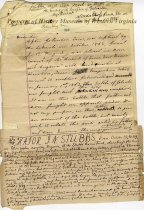
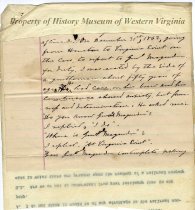
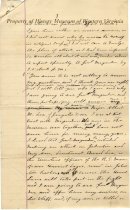
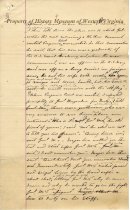
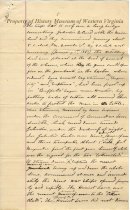
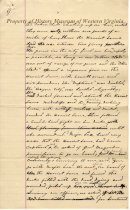
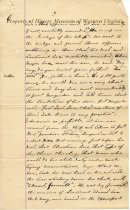
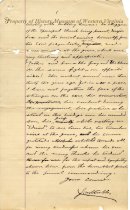
At the bottom of the first page of Stubb's letter, Bernard has glued this biography of James N. Stubbs. James N. Stubbs was born October 17, 1839, in Gloucester County, Virginia, and was educated at William & Mary College. He joined the Gloucester Artillery in 1861, was commissioned a First Lieutenant in 1862, and was sent to Texas to report to Gen. John Bankhead Magruder, also called "Prince John". Stubbs remained in the Trans Mississippi Department throughout the war and was the truce officer at the surrender of Galveston, Texas, June 21, 1865. After the war he studied law at the University of Virginia and practiced his profession in Glouster County. He was a member of the law board in the General Assembly of Virginia, spent four years as a Virginia representative, and served 12 years in the senate. Stubbs is a member of the Grand Camp of Confederate Veterans, and is its history chairman. He is also a member of the history committee of United Confederate Veterans, of which Stephen Dill Lee, of Mississippi, is chairman. After Galveston, Texas, was captured by the Federals in October 1862, Gen. John B. Magruder was put in command of the District of Texas, New Mexico, and Arizona, with headquarters in Houston. Magruder was determined to recapture Galveston and on January 1, 1863, the battle of Galveston was fought and the city recaptured. In this battle a father and son fought on opposite sides. In his letter, Stubbs says he will not relate the history of the battle but relates the parts acted by the father and son during and after the engagement. On December 31, 1862 as Stubbs was traveling from Houston to Virginia Point (Texas) on the cars (train) to report to Magruder. He was sitting next to a gentleman of about fifty years old and entered into conversation. The man asked if Stubbs knew Magruder, where he was and if Magruder contemplated an attack on Galveston. Stubbs gave evasive answers to the man's questions as he did not know who the man was, and also he would not divulge the plan to attack the city. The elder man understood the situation and began to reveal things about himself. He was Maj. Albert M. Lea of Gonzales, Texas, and had been at West Point with Magruder. Both had served in the Mexican war, but Mr. Lea had not seen the General since that time. Mr. Lea had heard of a possible attack on Galveston and was on his way to see General Magruder to offer his services, perhaps on Magruder's staff. Mr Lea's son, Lt. Edward Lea, was executive officer on the U. S. man of war "Harriet Lane" then in Galveston Harbor. He knew the ship would take part in any fight, and if his son were either killed or captured Lea of course would want to see him. After Mr. Lea revealed this information, Stubbs told him that there was a plan to attack Galveston the next morning. They continued their conversation while traveling to Virginia Point. Mr. Lea told Stubbs that his son was a graduate of the U. S. Naval Academy, and when the war commenced was an officer in the U. S. Navy. He had tried to coax his son to come South but the young officer said he would remain with the "old flag". After reaching Virginia Point, Stubbs reported to Magruder at his headquarters. Stubbs told the general that there was someone outside whom the General knew and that person wanted to see him. Mr. Lea was asked to come in. After recognizing his old friend and learning the purpose of the visit, the General assigned Mr. Lea to his staff. Magruder commenced his attack on Galveston Harbor, December 31, 1862, by moving his troops from Galveston Island to the mainland. On January 1, 1863, the artillery were in place on the end of the wharves where they could fire on the nine Union gunboats and three transports in the harbor. Two steamers had been converted into Confederate "Cotton Clads" in Houston, and moved into Galveston Harbor under the darkness of the early morning of January 1. Magruder fired the first gun from the wharf at five AM, which was the signal for the "Cotton Clads" to steam down and capture the nearest man-of-war, which was the "Harriet Lane". The "Harriet Lane" was caught between the fire of the guns on the wharf and the two "Cotton Clads". The Union ships disabled the Confederate "Neptune", but the Confederate "Bayou City" rammed the Union "Harriet Lane", which was boarded by the Confederates. Hand-to-hand fighting then followed until the "Harriet Lane" surrendered. Major Lea gained permission to board the Union ship, and along with Major Stubbs went in search of his son. The son was located, mortally wounded, on the bridge. Close to death the son recognized his father. When informed of the son's condition Magruder offered up his personal quarters, where Edward Lea was taken. The father held his son's hand and with tears streaming down his cheek said his farewells. The next day, January 2, 1863 the boy was buried at the Episcopal Church cemetery, with his father officiating. Though the incident happened more than thirty years prior (to the time the memoir was written) Stubbs never forgot the incident, or the look on the father's face. The father, Mr. Lea, was most appreciative of all the kindnesses shown him, by those from the humblest private to the commanding general. |
Year Range from |
1895 |
Creator |
Stubbs, James N. |
Year Range to |
1895 |
Subjects |
Artillery (Weaponry) Attack Bale cotton Battle Blood Board Born Bridge (Ship's) Bridges Capture & imprisonment Cars ( Railroad ) Cemeteries Chairman Cheeks Christian Church Citizen City Civil War Civil war battles Commission (military) Confederate officers Confederate soldiers Cotton Cruises Dead persons Decks (Ships) Duty Engagement Fathers Federal Flag of truce Flags Friends General Assembly Gentlemen Graduates Gratefulness Grave Grief Gunboats Guns Harbors Headquarters, Military Heroes History Homesteads Interviews Law practice Legislature Letters Line (military) Major Member Muskets Orders, military Prayer Book Private, military rank Quarters, Military Question Remains Revolvers Seas Ships Signal gun Small arms Sons Staff Staff officer Steamboats Steamer Steamships Surrenders Sympathy Tears Transports (vessel) Troops Vessels War Wharves Wounded |
Search Terms |
Bayou City (Confederate Cotton Clad) Buffalo Bayou (near Houston) Civil War Confederacy, the Confederate Army Confederate Veterans Cotton Clads (Confederate vessels) District of Texas, New Mexico, and Arizona Episcopal Church Galveston Island Galveston, Texas Gloucester Artillery Gloucester County, Virginia Gonzales, Texas Harriet Lane (Union Man-of-War) Houston, Texas Mexican War Mexico Neptune (Confederate Cotton Clad) Petersburg, Virginia Texas Trans Mississippi Department U. S. Naval Academy, Annapolis, Maryland U. S. Navy United Confederate Veterans University of Virginia University of Virginia, Charlottesville, Virginia Virginia Point War Between the States War Talks of Confederate Veterans West Point Military Academy William and Mary College Woods Crop Road, Gloucester, Virginia |
People |
Bernard, Geo. S. Bernard, George S. Lea, Albert M. Lea, Edward Lee, General Stephen D. Magruder, John Bankhead Smith, Leon (Commodore) Stubbs, James N. |
Event |
Civil War |
Collection |
George S. Bernard Collection |
Imagefile |
023\200975072.JPG |
Number of images |
8 |
Object Name |
Letter |
Object ID |
2009.75.072 |
Extent of Description |
Eight pages, size 8" x 13" |