
Archive Record
Images
Additional Images [9]
Metadata
Title |
Recollections of Walter N. Jones |
Dates of Creation |
1894 |
Scope & Content |
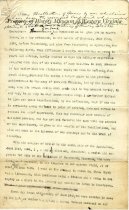
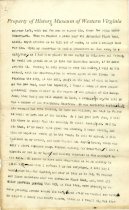
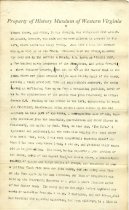
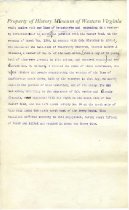
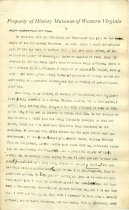
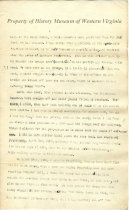
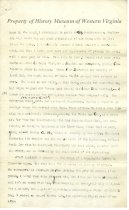
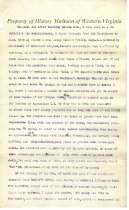
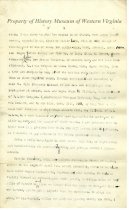
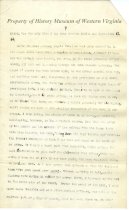
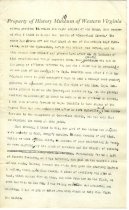
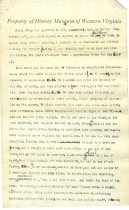
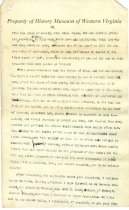
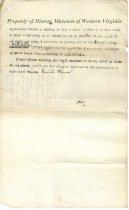
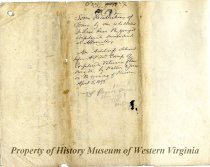
The 14 typed pages comprise the address delivered to the A. P. Hill Camp of Confederate Veterans of Petersburg, on April 5, 1894, by Walter N. Jones, who claimed to be the youngest Confederate to surrender at Appomattox Court House, There is a page 3 1/2 inserted. On the reverse of the last page is a handwritten note by Jones and a written notation by George S. Bernard. Jones, in 1864, was a 13 year-old boy who lived in Dinwiddie County, Virginia. He worked for a kinsman as a clerk in a grocery and commission house in Petersburg. Jones began by offering to relate his experiences as a boy volunteer in the battle before Petersburg in June of 1864, and in the retreat from Petersburg to Appomattox Court House in April of 1865. When Union Gen. Benjamin "Beast" Butler advanced to the south side of the Appomattox River on June 15, 1864, Jones reported for duty. He was 13 years old and was attached to the battalion of the Petersburg Reserves. At that time the battalion was in the trenches near the Willcox Farm. On the morning of the 16th, his battalion was ordered to move to the left of their current position as Butler was making a strong move in the direction where Confederate General Beauregard's defenses were thin. As Jones reached the Jerusalem Plank Road he was ordered to take a message to the home of his commander. The commander's intent was to avoid subjecting this young boy to the danger that was to come. Feeling duty bound, Jones reluctantly left on this errand, determined to return. While performing his mission Jones met a stranger who said he was a member of the Petersburg Reserves, and could not find where the command was positioned. Jones offered to take his new comrade back to the unit just as soon as he completed delivery of his commander's message. His mission completed, he returned and escorted his new comrade and other recruits back to the lines where they first reached a position that housed a heavy cannon. There being no threat, Jones proceeded forward toward the sound of heavy firing, but found he had lost his new comrade. Jones and the others crossed over the Norfolk and Petersburg Railroad bridge, known as "Summit Cut", a few hundred yards from the Avery House, and headed for the Baxter Road. Going forward, and following the lines, they came within range of enemy artillery and musketry fire. Pushing his way to the left he was warned by the old soldiers manning that part of the works that it was best to stop where he was. These old soldiers had been collected from the hospitals and guard-houses and were called "The P. P's" (Patients & Penitents). Heeding their advice and example, Jones stopped and hugged the ground. The enemy had been able to capture a commanding position and continued to pour heavy fire into the lines of the Confederates. Jones was unable to link up with the Petersburg Reserves, who were positioned to the right some distance away. During the course of the day they suffered heavy casualties. Jones remained with the "Patients and Penitents" the better part of the day, but felt isolated as he was with persons he did not know. (Note. Patients and Penitents or P P's is credited to General Henry Wise as he was referring to men from hospitals and guard houses as well as young boys and old men). At noon General Lee's reinforcements began to arrive to take over the lines. Jones saw his morning comrade, who was homeward bound, and took the liberty of joining him. They both crossed over an open field that subjected them to shells bursting around them. After reaching safety Jones reproached himself for leaving and slowed his progress. In doing this, he watched his comrade hurry forward, never to be seen again. About this time Jones saw one of General Lee's veteran officer horsemen coming from the direction of the Avery House. They both reached the bridge over "Summit Cut" on the Norfolk and Petersburg railroad at the same time. While crossing the bridge, with the horseman in the advance, a shell dropped in front of the officer, slid off into the cut below, and exploded. At four in the afternoon the Petersburg Reserves were brought off the field. Jones climbed a tree near the railroad bridge and fired a parting shot toward the enemy. Jones tells us he did no more service until General Lee evacuated Petersburg on April 3rd, 1865. He does say, however, that he had several more experiences in the trenches and with raiding parties in Dinwiddie County. On March 29, 1865, Jones went with his pony and cart to Petersburg, from his home near Dinwiddie Court House. When he returned the next day he found himself cut off from his home because the Federals had engaged the Confederate lines at Burgess Mill and Five Forks. Jones felt that this was a good opportunity to join the army as he had a pony, so he remained. with his pony and cart. On April 2nd, 1865, the wagon trains of General Wise's command were ordered to move back toward the Southside Railroad. Jones joined in the retreat of the wagon train, toward Amelia Court House. with his pony and cart. On the night of April 2nd, 1865, General Lee evacuated. At daylight Jones stopped at a farm and left his wagon, mounted his pony, and continued on to Amelia. The next day he stopped at a friend's house, where some officers were having a meal. Jones offered his services to the commissary officer, who made him his courier. He was charged with a group of wagons and his duty was to keep the teamsters closed up as they retreated toward Appomattox. The wagon train was frequently stopped because of cavalry attacks. On the morning of April 6th the wagon train was attacked near Sailor's Creek. Jones was forced to make a hasty retreat when enemy cavalry set fire to the wagons. Upon returning, Jones found that the wagons in his charge were among those burnt, and his saddle bags had been taken from one of the wagons. Jones's mother's name and address were written on them and after the war the items were returned. A captain in the 8th New Jersey, through lengthy correspondence, was able to locate Jones, and on October 16th, 1883, Jones' long-lost saddle bags arrived in a morocco case. The commissary officer, now without stores or wagons, continued on to Farmville hoping to replenish his lost goods. After sleeping in the woods, Jones arrived in Farmville. The morning of the 7th of April, at the depot, provisions were found but wagons to carry them were few. Troops passing through the town helped themselves as the retreat continued. Jones was ordered to wait at the depot until empty wagons could be sent to load the bacon and flour. Jones waited patiently until the evacuation of the town was complete. When he heard the crack of muskets Jones strung two pieces of bacon on his horse, mounted, and made a hasty exit from Farmville. Jones crossed over the river, cresting a hill on the northside. Here he found the commissary officer and others gathered on the left of the line of battle that was drawn up to retard the advancing enemy. The forthcoming action was called the "Battle of Cumberland Church." Jones, as a courier, was almost sent to an exposed position on the battle line, but because of his age was saved from this dangerous assignment. The commissary officer then ordered Jones forward to take charge of two wagons, so he missed the battle. In the evening, some of the wagon trains were attacked by Union General Gregg's cavalry. They were chased off by a portion of Confederate infantry and cavalry. General Gregg was captured in this engagement, and Jones almost had his horse impressed for the captured general to ride. Jones quickly rode back to his position with the wagon train. (Note. Jones states that the General captured was Gregg. This is suspect as Gregg resigned from regular and volunteer service on February 3, 1865). Continuing the retreat Jones and the wagons reached the vicinity of Appomattox Court House the evening of the 8th of April. The next morning Jones could see General Lee's headquarters about 100 yards away from Jones' camp site. The wagons remained parked and the surrounding camp was all quiet. After awhile it became known that negotiations for a surrender were in progress. Jones feared he would be sent to a Northern prison so he packed his haversack with some ham, mounted his horse, and set out to pass the lines. He soon found out that he best remain, so returned to where he started from. His attention was drawn to General Lee's headquarters and he joined others going there as they crowded around the General. Lee then asked his staff to tell the men about the terms of surrender. Jones quotes the words written by Colonel Walter H. Taylor, of Lee's staff, in describing the scene of Lee's farewell. Silence and tears prevailed and their hearts were filled with love and admiration for their beloved chief. Afterward Jones bade farewell to his comrades and prepared to leave Appomattox. His intention was to slip away without a parole so that he might do what he thought best. His thoughts were to join up with General Johnston. He succeeded in getting out of the Federal lines without a parole, but was dissuaded from joining General Johnston. Jones concluded his letter with the claim that, until disproved, he was the youngest Confederate to surrender at Appomattox Court House. |
Year Range from |
1894 |
Creator |
Jones, Walter N. |
Year Range to |
1894 |
Subjects |
Adoration African Americans Ammunition Artillery (Weaponry) Attack Attendants Bacon Battalions Batteries (Weaponry) Battle Biscuit Blankets Boys Breakfast Breakfast Breastworks Bridges Bridges Bullets Burn Camp Campaigns, Military Cannons Captures Carbines Cavalry Cheer Civil War Civil war battles Clerk Command Commander Commissary Company Comrades Confederate money Confederate soldiers Confederate veterans Corn Correspondence Country Courier Depots, Military Dining Dirt Ditch Duty Earthworks (Archaeology) Enemy Engagement Engagement Errand Evacuations Experiences Experiences Explosions Farmers Fate Feeding of animals Field Fire Flank Flour Fragments Friends Front Gallop Grocery stores Ground Guardhouses Guards Gum cloth Haversack Headquarters, Military Hearts Hills History Horse Hospitals Hunger Intersections invitation Kill Kinspeople Leadership Liberty Line (military) Line of battle Meetings Member Memory Message Message Mothers Mounds (Landforms) Muskets Muster Negotiating Negroes News Officers, Military Orders, military Parole Ponies Position (military) Position (military) Postmasters Pride Prisoner Progress Railroad Ranks, military Ranks, military Rations Rear guard Recollection Recruits Reinforcements (military) Relatives Reservoirs Retreats, Military Rumor saddle bags Saddles Service (military) Shells (Ammunition) Shot Soldiers Staff Stranger Surrenders Sympathy Teamsters Tears Tents Towns and cities Tree Trench Tributes Troops Veterans Volley Volunteer Volunteer Wagon trains Wagons Wagons, Horse drawn Wishing Witnesses Woods Wounds Yankees Yards Youth |
Search Terms |
3rd Battalion Virginia Reserves (Archer's) 8th New Jersey Cavalry A. P. Hill Camp of Confederate Veterans Alabama Brigade Amelia Court House, Virginia Anderson's Brigade Appomattox Appomattox County, Virginia Appomattox Court House, Virginia Appomattox River Army of Northern Virginia Avery House Baxter Road Boydton Plank Road Burgess Mill Civil War Confederacy, the Confederate Army Confederate Veterans Cumberland Church (battle) Dinwiddie County, Virginia Dinwiddie Court House, Virginia Farmville, Virginia Field's Division Five Forks (battle) Georgia Gregg's Cavalry Jerusalem Plank Road, Petersburg, Virginia Lincoln Post, No. 1 Dept. of New Jersey G.A.R. Newark, New Jersey Norfolk & Petersburg Railroad Petersburg Reserves Petersburg, Virginia Prince George Court House, Virginia Richmond, Virginia River Road River View Land and Manufacturing Co. Robert E. Lee Camp of Confederate Veterans Sailor's Creek (battle) Sheridan's Cavalry South Side Railroad Third Battalion Virginia Reserves (Archer's) Union Army War Between the States War Talks of Confederate Veterans White Oak Road Willcox Farm |
People |
Anderson, George Anderson (Tige) Archer, Fletcher H. Beauregard, [Pierre Gustave Toutant] Bernard, Geo. S. Bernard, George S. Bowers, Charles F. (Chas.) Butler, Benjamin F. (Beast) Maj. Gen. Clements, Andrew J. Field, Charles William Forney, William Henry Grant, [Ulysses S.] Gregg, David McMurtrie Johnston, Joseph E. Jones, John T. Jones, Walter N. Lee, Fitzhugh Lee, Robert E. (Robert Edward) Rowlett, [unknown] Sheridan, [Philip H.] Smyth, Thomas [Thos.] Taylor, Walter Tennille, A. L. C. Ward, William Williams, Charles Wise, Henry Alexander |
Event |
Civil War |
Collection |
George S. Bernard Collection |
Imagefile |
023\200975039.JPG |
Number of images |
15 |
Object Name |
Letter |
Object ID |
2009.75.039 |
Extent of Description |
15 pages |