
Skip to content
Museum Homepage
Museum logo

Search Term Record

Metadata

Related Records

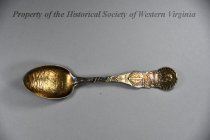
  1. Columbus Souvenir Spoon
  2. John E. Laughton October 24, 1892 letter - October 24, 1892

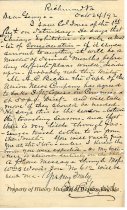
    Laughton informs Bernard that he has seen Colonel Jones of the 1st Regiment, who said that the Chicago Exhibit was only a matter under consideration. It would be a matter of months before any plans would be decided upon, and probably not this winter. Laughton states that Mr. A. C. Becker, the superintendent of the Union News Company, will take 50 copies on commission at 50 cents each, and will take more if needed. Mr. Becker said that this is ...

    Record Type: Archive
    JLaughton October 24, page 1
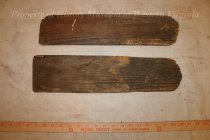
  3. McLean-House Shingles - Two wooden shingles from the McLean house in Appomattox Court House, Virginia. 19th century, American. Given to Carrie Doyle by Mr. and Mrs. W.H. Ragland, who owned the house when it was sold. The McLean home in the village of Appomattox Court House, Virginia, was used on 9 April 1865 for the surrender meeting between General Robert E. Lee, C.S. A. and Lt. General Ulysses S. Grant, U.S.A. The house was also used on 10 April 1865, for the Surrender Commissioners meeting, and over the next few years as the Headquarters of Major General John Gibbon, U.S.A. The McLeans left Appomattox Court House and returned to Mrs. McLean's Prince William County, Virginia estate in the fall of 1867. When Wilmer McLean defaulted on repayment of loans, the banking house of "Harrison, Goddin, and Apperson" of Richmond, Virginia brought a judgement against him, and the "Surrender House" was sold at public auction on 29 November 1869. In 1872, Nathaniel H. Ragland purchased the property for $1,250.00. On 1 January 1891, the property was sold by the Widow Ragland for the sum of $10.000.00 to Captain Myron Dunlap of Niagra Falls, New York. Myron Dunlap and fellow speculators went through two or three plans intending to capitalize on the notoriety of the property, one idea was to dismantle the home and move it to Chicago, Illinois as an exhibit at the 1893 World's Columbian Exposition. The house was dismantled and packed for shipping, but due to cash flow and legal problems, the plan was never brought to fruition. The home sat dismantled in piles subject to vandals, collectors, and the environment for 50 years. On 10 April 1940, Appomattox Court House National Historical Monument was created by Congress to include approximately 970 acres. Historical data was collected, and architectural plans were drawn up to begin the reconstruction process. On 9 April 1949, 84 years after the historic meeting reuniting the county, the McLean House was opened by the National Park service for the first time to the public.

    1967.46 a & b

    Record Type: Object

    McLean house shingles
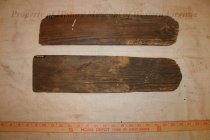
  4. Two roof shingles from the McLean House at Appomattox Cout House, Virginia. - Two roof shingles from the McLean House in Appomattox Court House, Virginia. 19th century, American. Notes indicate the shingles were given to Carrie Doyle by Mr. and Mrs. Ragland who owned the house. The McLean home in the village of Appomattox Court House, Virginia, was used on 9 April 1865 for the surrender meeting between General Robert E. Lee, C.S. A., and Lt. General Ulysses S. Grant, U.S.A. The house was also used on 10 April 1865, for the Surrender Commissioners' meeting, and over the next few years as the Headquarters of Major General John Gibbon, U.S.A. The McLeans left Appomattox Court House and returned to Mrs. McLean's Prince William County, Virginia estate in the fall of 1867. When Wilmer McLean defaulted on repayment of loans, the banking house of "Harrison, Goddin, and Apperson" of Richmond, Virginia brought a judgement against him, and the "Surrender House" was sold at public auction on 29 November 1869. In 1872, Nathaniel H. Ragland purchased the property for $1,250.00. On 1 January 1891, the property was sold by the Widow Ragland for the sum of $10.000.00 to Captain Myron Dunlap of Niagra Falls, New York. Myron Dunlap and fellow speculators went through two or three plans intending to capitalize on the notoriety of the property, one idea was to dismantle the home and move it to Chicago, Illinois as an exhibit at the 1893 World's Columbian Exposition. The house was dismantled and packed for shipping, but due to cash flow and legal problems, the plan was never brought to fruition. The home sat dismantled in piles subject to vandals, collectors, and the environment for 50 years. On 10 April 1940, Appomattox Court House National Historical Monument was created by Congress to include approximately 970 acres. Historical data was collected, and architectural plans were drawn up to begin the reconstruction process. On 9 April 1949, 84 years after the historic meeting reuniting the county, the McLean House was opened by the National Park service for the first time to the public.

    1967.46

    Record Type: Object

    Wooden Shingles
  5. W. E. Cameron letter of May 12, 1893 - May 12, 1893

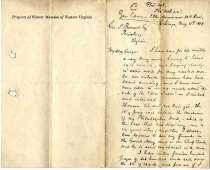
    Cameron, writing from Chicago, tells Bernard that for two months he has been busy and has not been able to do much about the sale of "War Talks of Confederate Veterans." The first of June he will conclude the writing of his Philadelphia book, which has kept him busy, but then will have time for leisure and to visit old friends in the Grand Army and Confederate Camps. He says he has written fourteen hundred pages of six hundred words each si...

    Record Type: Archive
    Cameron-May 12 Page 1
  6. William E. Cameron December 5, 1892 letter - December 5, 1892

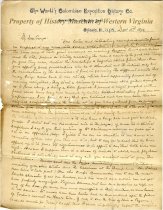
    Cameron acknowledges the receipt and enclosures of a letter from Bernard, and tells him how he enjoyed reading the contribution from Sgt. Crow and the other papers recalling the men and events of the good old times. Good times they were, regardless of the hardships and tragedies. One good effect of the publication of the book will be to stimulate, not just the interest, but the recollections, of the survivors. Cameron finds himself, while reading...

    Record Type: Archive
    Cameron December 5, page 1
  7. William E. Cameron November 22, 1892 letter - November 22, 1892

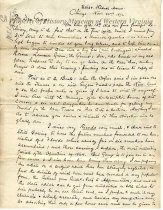
    Cameron writes that Bernard's last letter did not reach him right away, as he had moved to other accommodations. Not having heard from Bernard, Cameron thought perhaps Bernard had an important law case with a big fee (not contingent). Laurence Grover, who boards at his old place, saw the letter on the table, and brought it over right away. "To which I now reply." Cameron says that when the copies of the book arrive he will place one with the H...

    Record Type: Archive
    Cameron November 22, page 1
  8. William E. Cameron October 2nd, 1892 letter - October 2, 1892

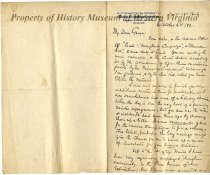
    Cameron informs Bernard that he received the advance copies of "Crater", "Maryland Campaign", and Chancellorsville. He compliments Bernard on the value of the book, and says the Crater article is especially valuable because of the viewpoints and evidence brought out by the Federal and Confederate narrators, and the way it was edited. Cameron will not be able to furnish any additional matter in time for the publication, because he is overwhelme...

    Record Type: Archive
    Cameron October 2, page 1
  9. William E. Cameron September 1, 1892 letter - September 1, 1892

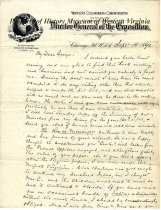
    Cameron is working as head of the World's Columbian Commission for Chicago's Worlds Fair Cameron is happy that Bernard has written. He, himself, has been busy and has not been able to write more than enough to make the "pot boil". The notes Cameron sent some weeks before will be all he can contribute, but he will copy from his diary and send Bernard the itinerary of the marches for the years 1862/63, and, if time permits, will add some inciden...

    Record Type: Archive
    Cameron September 1, page 1

Thank You!

Confirmation Message Here....