

Archive Record
Images
Additional Images [23]
Metadata
Title |
Beauregard at Drewry's Bluff & Petersburg |
Dates of Creation |
April 12, 1893 |
Scope & Content |
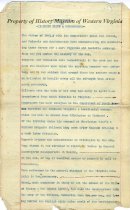
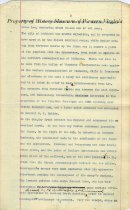
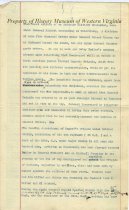
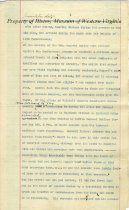
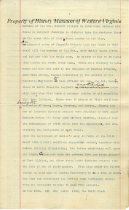
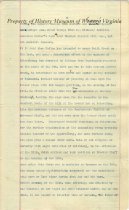
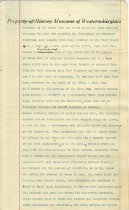
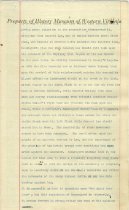
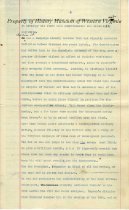
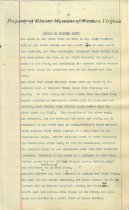
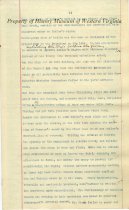
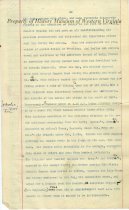
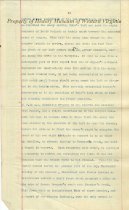
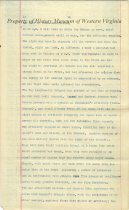
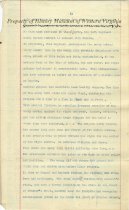
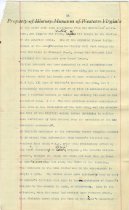
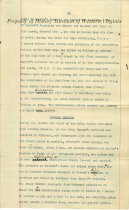
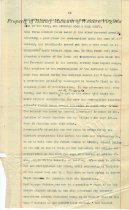
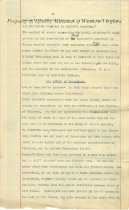
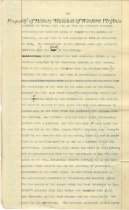
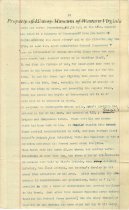
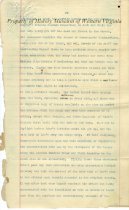
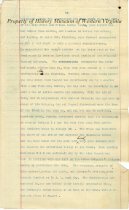
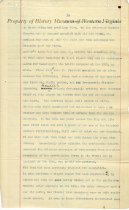
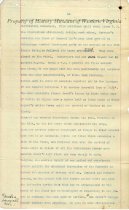
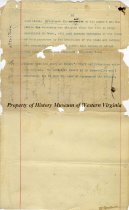
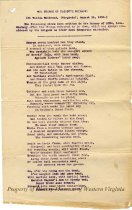
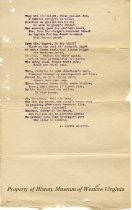
Johnson Hagood was born in South Carolina, educated at the South Carolina Military Academy (The Citadel), practiced law, and was a member of the state militia. He entered the Confederate service at the start of the Civil War and in 1862 was ranked as a Brigadier General. In early 1864 he was in charge of the Seventh Military District of the Department of South Carolina, Georgia, and Florida, commanded by Gen. P.G.T. Beauregard. When Beauregard was summoned north for the defense of Richmond, Hagood joined him. In 1893 Hagood wrote the narrative, here displayed, where he praises Beauregard and recounts the battles at Drewry's Bluff, Bermuda Hundred, and Petersburg. As shown on image page 27, the narrative was read on the occasion of the presentation of Beauregard's sword to the City of Charleston. Images 28 and 29 are a poem written by Joseph Blythe Allston (1833-1904), titled "The Charge of Hagood's Brigade". The first part of Hagood's narrative deals with giving the background of the Eastern Theater. In 1864 Union General Grant, with the Army of the Potomac, lay behind the Rapidan River, sixty miles north of Richmond, confronted by Confederate General Lee and the Army of Northern Virginia. Richmond was Grant's objective. Union Gen. Benjamin Butler was to move from Fortress Monroe, at Hampton Roads, Virginia, up the James River, and secure a point at the junction with the Appomattox River, in order to operate on the southern communications of Richmond. Beauregard, at Weldon, North Carolina, had been assigned to the department of North Carolina and Southern Virginia. This was a territorial command which was made to extend from Wilmington, North Carolina, to Richmond, Virginia. The Brigades of his command at Charleston, South Carolina, joined him. On the 5th of May, 1864, Hagood's Brigade proceeded by rail to Petersburg. On the 4th of May, Grant commenced his overland march, and Butler moved north on the James. On the 5th of May Butler debarked at Bermuda Hundred, at which point he would be three miles from the railroad and from the Pike that ran between Petersburg and Richmond. Confederate General Pickett, in command at Petersburg, had only local militia; the independent command of Confederate General Ransom (in Richmond) totalled 5,000 troops. Marching from Petersburg on the 6th Hagood encountered and repelled a Union brigade at Walthall Junction. There was firing a few miles beyond Drewry's Bluff. Confederate Gen. Bushrod Johnson arrived during the night to give aid and assistance. The next day on May 7th, Butler sent forward five brigades with artillery and cavalry to confront the Confederates. The action that developed was open-field fighting. At dark, Butler withdrew to his fortified base at Bermuda Hundred. Butler attempted another forward motion on the 9th, but the Confederates held at the Swift Creek line, which ended the opportunity for Butler to take Petersburg. The next day Beauregard had arrived with sufficient troops to make Petersburg safe from assault. Butler's failure had left the road open for the transfer of troops from Petersburg to enter the southern defenses of Richmond, at Drewry's Bluff. On the 12th, skirmishing commenced in front of Drewry's Bluff, and continued for a day or two. On the night of the 13th Confederate General Hoke moved his division from the outer defense lines to the stronger interior line. Beauregard arrived on site on the 14th, bringing more troops. He was brought up to date with the situation and gained information on the state of affairs concerning Lee and Grant. Beauregard then devised a plan where he could take cooperative action on his own and with Lee's army. He sent his plan to Richmond for the purpose of submitting it to President Davis. Gen. Braxton Bragg, acting as Davis's Chief of Staff, came to Drewry's Bluff to confer with Beauregard. Arriving later, Davis disapproved the plan, which would have entailed General Lee, now at Guinea Station, to fall back upon the defenses of Richmond. Davis was concerned about the effect it would have on the morale of the people and the troops seeing the apparent retreat of Lee. Beauregard then turned to the immediate situation confronting him. Ransom's division arrived from Richmond on the evening of the 15th, and on the morning of the 16th the battle of Drewry's Bluff commenced. Beauregard had his army organized into three divisions. Right and left were under Hoke and Ransom; the reserve was under General Colquitt. The 4,000 men under General Whiting at Walthall Junction was put into position upon Butler's right rear. When Whiting heard the opening of the engagement, he was to advance boldly and attack the enemy's rear. Butler, in a defensive posture, had positioned Union General Smith's XVIII Corps on the right and General Gillmore's X Corps on the left. Ransome's four brigades charged into Smith's right flank. Slowed by fog, the Southerners routed Union General Heckman's brigade, capturing 500 Federals, and five flags. Ransome then halted to re-form. He reported his loss was heavy, troops were scattered by the fog, his ammunition was low, and he asked for reserves. Hoke, though hindered by the fog, attacked Gilmore's lines, causing them to fall back. Hagood and Johnson went forward with a section of the Washington Artillery, and found six or eight pieces of enemy artillery in their front. Hagood was able to drive the enemy from the outer defense line. He captured prisoners and five pieces of artillery; then he took position in these works. Johnson meanwhile was also heavily engaged. Further movement was suspended to await communications from Whiting, or the sound of his approach, and to reorganize. At 4 PM all hope of Whiting's approach was gone because he had halted before one of the Union divisions left behind at Walthall's Station. The enemy made two charges upon Hagood and Johnson, but were repulsed. With the assistance of the artillery, the pike was cleared. Whiting's lack of aggressiveness and a heavy rainstorm allowed Butler to reach his works across the neck of the peninsula. On the 17th, Ransom's division was recalled to Richmond. Beauregard, with the remainder of his troops, moved in pursuit of Butler, Whiting's force joining him on the march. At 3 PM Butler's pickets were encountered and skirmishers were thrown out. Beauregard's attention was now given to establishing the shortest practicable line across the neck of the peninsula and entrenching it, while holding it with the smallest number of troops. Through a series of actions he was able to advance and straighten his lines. At Howlett's House on the James, his line ran almost directly to Ashton Creek near the junction with the Appomattox. Butler was now where he was secure against attack, but he was powerless for offensive operations against Richmond. General Grant called him "Bottled up Butler". The Confederate lines across the peninsula were an integral part of Petersburg's defense. It was abandoned only when Petersburg fell during the war's final week. Hagood next relates Beauregard's three day fight before Petersburg, which started on June15th, 1864. After he sent troops to Grant, Butler remained "bottled up" on the Bermuda Hundred. Grant was approaching the Chickahominy River, and in order to reinforce Lee, Beauregard had to deplete his forces. He had only 5,400 troops to hold off Butler and protect Petersburg. After Grant's desperate effort failed at Cold Harbor he remained stationary north of the James for ten days. On the 12th he transferred his operations to the south side of the James. By noon on the 15th Union General Smith's Corps was outside Petersburg. Lee was caught unaware by Grant's movements, and Beauregard was left to defend the city with the force at hand. Beauregard first recalled Hoke's division from around Drewry's Bluff on the eastern side of the James. These were his own troops that had been sent to Lee. Finding rail transportation Hoke first sent Hagood's and then Colquitt's Brigades with the remainder to march along the Pike. Smith arrived with his 22,000-man Corps and faced three miles of entrenchments held by Wise's Brigade of 2,200. The brigade consisted of some detached infantry, local militia, and Dearing's Cavalry. At 7 PM Smith assailed and carried the line in his front. After this success the Federal force was doubled with the arrival of Hancock's Corps, but instead of pressing on and seizing the town it determined to wait for morning. Hagood's Brigade arrived after dark and assembled in the streets where the routed troops poured back into Petersburg. A courier arrived and directed Hagood to move out on the City Point Road and take a position where he could set up a new defensive line. Riding forward and almost entering enemy lines he was determined to set the new defense line along Harrison Creek; he put his men in position. When Colquitt's Brigade came forward it prolonged the line. Beauregard pulled Johnson's Division from in front of the Bermuda Hundred, and when the rest of Hoke's Division arrived the Confederates now numbered 10,000. At the same time the Federal force had grown to 66,000; most of the day was spent in skirmishing and artillery fire. By nightfall, General Hancock had gained some advantage on the right of the line. Union General Warren's Corps now entered the fray and increased the attacking force to at least 90,000 men with no reinforcements for Beauregard in sight. The battle reopened on the 17th at noon and three times the troops were repulsed. At dusk a portion of the line broke, but fortunately Gracie's Brigade arrived from Chaffin's Bluff and restored the line. The conflict continued into the night. Beauregard determined that it was time to establish a new line of defense some 800 yards closer to the city which contained some of the original fortifications. This line would become the siege line. The movement was executed after midnight and by daylight of the 18th was complete. As the enemy advanced the next morning they found the defenses in their front abandoned, which brought forth loud cheers. Sending their skirmishers forward they soon found the new line of battle and heavy skirmishing commenced that would continue until three in the afternoon. Confederate General Kershaw's division was the first of Lee's Army to arrive. It was followed by Field's division, thus giving Beauregard a command of 20,000. At 3 PM the order for the general and final assault by the Federals was given. Just before dark it ended in a complete repulse. Lee reached Petersburg on the 18th, followed by two more Corps on the 19th, This constituted his army. Beauregard, no longer in command, proposed an attack upon Grant. He felt that the high spirits of the united and reinforced troops against the undoubted depression of the Federals, would give the Confederates a good chance at victory. Lee did not agree on the grounds that his troops needed rest, and that being in the defense gave them an advantage. Grant's sledge hammer tactics were expended and he would now direct his resources to siege operations, using turning movements in the field and cutting Confederate communications, forcing Lee to abandon Petersburg. |
Year Range from |
1893 |
Creator |
Hagood, Johnson |
Year Range to |
1893 |
Subjects |
Abbattis Action Advance African Americans Aid (Relief) Ammunition Armament Artillery (Weaponry) Assault Assault Assignment Attack Avenues Banners Bastion Batteries (Weaponry) Bluffs Breastworks Brigade Camp Campaigns, Military Canal Cannon balls Cannons Captures Cavalry Charge [military] Cheer City Civil War Civil war battles Colors Command Communications Confederate Army Confederate officers Confederate soldiers Conferences Conflict Consent Cooperation Courier Crises Critics Danger Dawn Depression (Mental state) Design Destroy Detachment Disasters Duty Enemy Engineers Entrenchment Events Execution Fate Federal Field Flank Foe Fog Gaps Garrison Ground Guides & scouts Gunboats Guns Headquarters, Military History House Idea Incident Infantry Instructions Investment Language Letters Limbers (artillery) Limbs Loop Loss Maneuvering Maps March, Military Matches Method Militia Myths Narrative Negro Obstacles Obstruction Offensive (military) Officers, Military Orders Paper Peninsulas Pike Plains Power and authority Proposition Railroad Ranges Recitals Reconnaissance, Military Reform Regiments Reinforcements (military) Relief (Aid) Report Request Reserve Retreats, Military Ridges Rivers Roadside Route Route, military Savior Schemes Shells (Ammunition) Shortcomings Shrapnel Shrouds Siege Skirmish Skirmishers Smoke Southern Cross Speculation Spirits Staff Strategic planning Strategy Streets Swords Tactics, military Tallows (candles) Tears Telegrams Telegraph Theater (military area) Tomb Transportation Valleys Victory Views, Panoramic Volunteer War Winter Wire Woods Writers Yankees |
Search Terms |
21st South Carolina Infantry 25th South Carolina Infantry 27th South Carolina Infantry 51st North Carolina Infantry Appomattox River Army of Northern Virginia Army of the Potomac Ashton Creek Baker's Cavalry Barton's Brigade Bartow's Brigade Bermuda Hundred Bushrod Johnson's Brigade Chaffin's Bluff Charleston, South Carolina Chester Station Chickahominy River City Point Road Civil War Cold Harbor Colquitt's Brigade Commander in Chief Confederacy, the Confederate Army Confederate Veterans Drewry's Bluff Dutch Gap, Virginia Fifty-First North Carolina Infantry Fort Clifton Fort Darling, [Drewy's Bluff] Fort Stephens Fort Sumter, [South Carolina] Fortress Monroe George Gregory Woods Gracie's Brigade Guinea Station, Virginia Hagood's Brigade Harrison's Creek Heckman's Brigade Hoke's Brigade Howlett's House James River Kemper's Brigade Kingland Creek Lewis's Brigade Morris Island, South Carolina Napoleon (artillery piece) North Carolina Parrott (artillery piece) Petersburg, Virginia Pocotaligo, South Carolina Prince George Road Proctor's Creek Ransom's Brigade Rapidan, [River] Richmond, Virginia Secessionville, South Carolina South Carolina Swift Creek Tennessee Twenty- Fifth South Carolina Infantry Twenty- First South Carolina Infantry Twenty-Seventh South Carolina Infantry Union Army United States Virginia Virginia Campaign Walkers Brigade Walthall Junction War Between the States War Talks of Confederate Veterans Washington Artillery Washington, DC Weldon Railroad Weldon, North Carolina William Gregory Woods Wilmington, N. [North] C. [Carolina] Wise's Brigade |
People |
Allston, Joseph Blythe Ames, Adelbert Badeau, [Adam] Baker, John A. Barton, Seth M. Barton, [unknown] Beauregard, [Pierre Gustave Toutant] Bernard, Geo. S. Bernard, George S. Bragg, Braxton Brooks, William T. H. Burnside, Ambrose E., General Butler, Benjamin F. (Beast) Maj. Gen. Clingman, Thomas L. Colquitt, [Alfred H.] Corse, Montgomery D. Dantzler, Olin M. Davis, Jefferson Dearing, [James] Dunovant, John Eschelman, Benjamin F. Field, Charles William Fry, Birkett D. Galliard, Peter C. Gillmore, Quincy A. Glover, J. V. Gracie, Archibald, Jr. Graham, John W. Grant, [Ulysses S.] Gregory, George Gregory, William Hagood, Johnson Handcock, Winfield Scott Harris, D. B. [engineer] Heckman, Charles A. Hencken, [unknown] Hoke [Robert F] Howlett, [unknown] Jackson, Thomas Jonathan Johnson, B. [Bushrod] R. Kemper, James L. Kershaw, [Joseph Brevard] Lee, Robert Edward Lewis, William Marton, [Captain Martin?] McCawthon, [unknown] McClelland, George B. Owens, W. M. Payne, [unknown] Pickett, George E. Ransom, Robert Simonton, [unknown] Smith, William F. Stephens, W. H. [engineer] Swinton, [unknown] Tabb, William B. Terry, William R. Walker, William S. Warren, Gouverneur Whiting, William H. C. Wise, Henry A. Wolseley, Garnet J. |
Event |
Civil War |
Collection |
George S. Bernard Collection |
Imagefile |
023\200975041.JPG |
Number of images |
29 |
Object Name |
Letter |
Object ID |
2009.75.041 |
Extent of Description |
28 pages, size 8" x 13" |